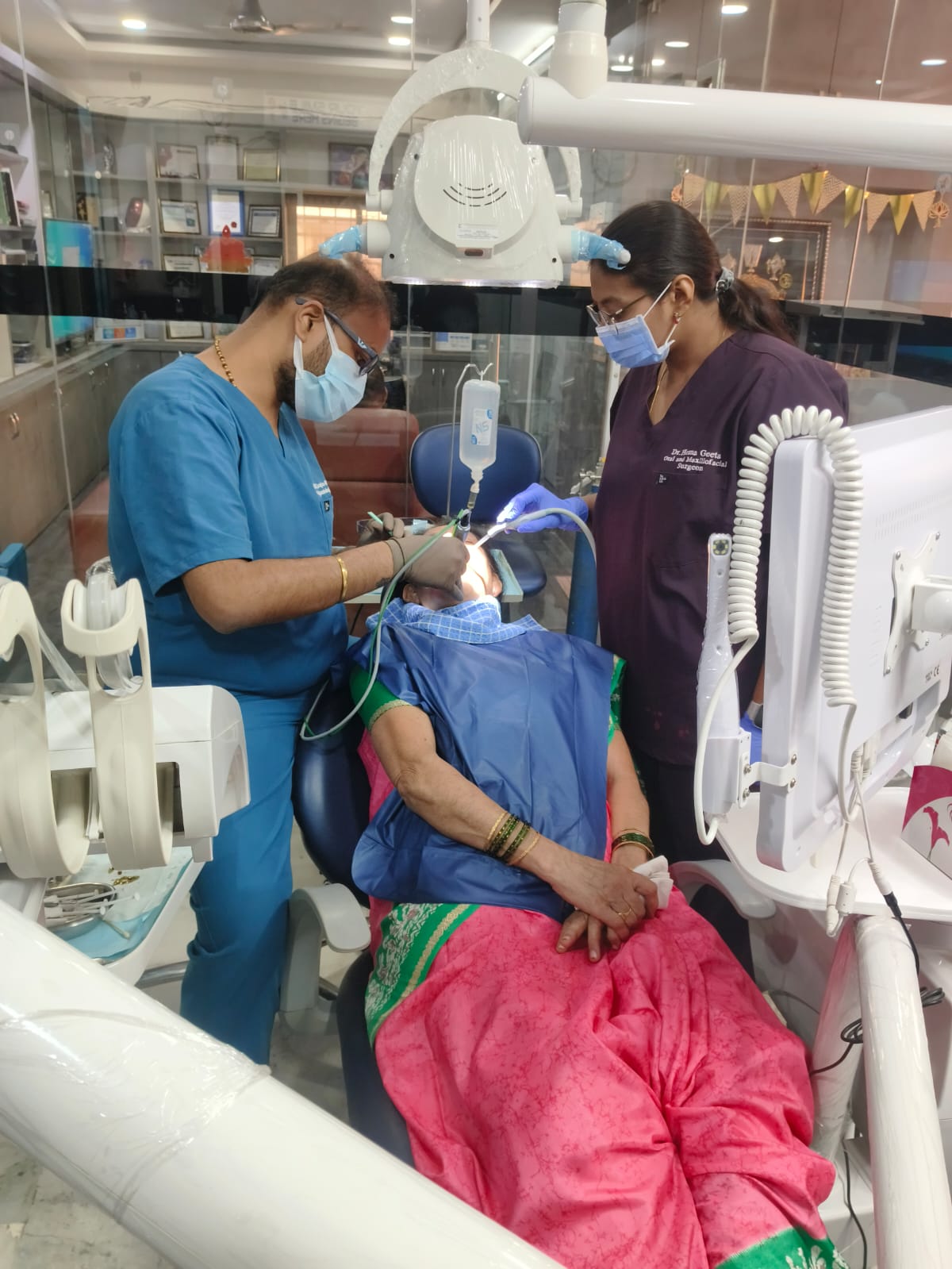
What is root canal treatment?
Root canal treatment (RCT), or endodontic therapy, is a procedure to remove infected or inflamed tissue from inside your tooth — specifically from the pulp chamber and root canals. Once cleaned, the canals are shaped, disinfected and sealed with a biocompatible material (gutta-percha). The tooth is then restored with a crown.
The goal is to eliminate infection, relieve pain and save your natural tooth — avoiding extraction. Modern root canal treatment, performed under proper anaesthesia, is not the feared procedure of decades past. Most patients report it feels like a routine filling.
When do you need a root canal?
Severe toothache
Persistent, intense pain — especially throbbing pain that wakes you up — often indicates pulp infection requiring treatment.
Prolonged sensitivity
Sensitivity to hot or cold that lingers for more than a few seconds after the stimulus is removed can indicate inflamed pulp.
Darkened tooth
Discolouration of a tooth — especially after trauma — can indicate pulp death and the need for endodontic intervention.
Swelling or abscess
A pimple on the gum, facial swelling or pus drainage near a tooth is a sign of infection that needs root canal treatment or extraction.
Deep decay
When decay reaches the pulp, a filling is no longer sufficient. Root canal treatment removes the infected tissue and seals the canal.
Cracked tooth
A crack extending into the pulp can cause infection. Root canal treatment, followed by a crown, can save such a tooth.
The root canal procedure
Diagnosis & X-ray
Digital X-ray or CBCT scan to assess the root anatomy, number of canals, and extent of infection or bone loss.
Local anaesthesia
The tooth and surrounding area are numbed completely. You will feel pressure but no pain during treatment.
Access opening
A small opening is made through the crown of the tooth to access the pulp chamber and root canals.
Canal cleaning & shaping
Infected pulp tissue is removed. Precision rotary instruments and irrigation solutions clean and shape the canals to their full length.
Obturation (sealing)
Canals are filled with gutta-percha and sealed. A temporary or permanent filling closes the access opening.
Crown placement
A full-ceramic crown is placed within 2–4 weeks to restore function and protect the tooth from fracture long-term.
Who is this for?
- Patients with severe, persistent toothache or abscess
- Anyone with deep decay that has reached the nerve of the tooth
- Patients who want to save a tooth rather than extract it
- Teeth that have become infected or died following trauma or a crack
- Patients referred for retreatment of a previously root-canal-treated tooth
Why choose Balaji's Best Dental?
Consultant endodontist
Dr. Sai Harish P, our consultant endodontist, performs root canal treatment. Specialist expertise — not general practitioner work on complex cases.
Single-visit treatment
Most root canals are completed in one appointment where clinically appropriate — saving your time and reducing post-treatment discomfort.
Magnification & precision instruments
Treatment performed under magnification with precision rotary files. Improved accuracy means more thorough canal cleaning and better outcomes.
In-house CBCT for complex cases
For curved, calcified or unusual root anatomy, our CBCT scanner gives a full 3D view — avoiding surprises mid-treatment.